How to improve airflow in a two-story Des Moines home
Upstairs hot, downstairs cold? Learn how to improve airflow in a two-story Des Moines home with duct fixes, zoning, and vent strategies that actually work.
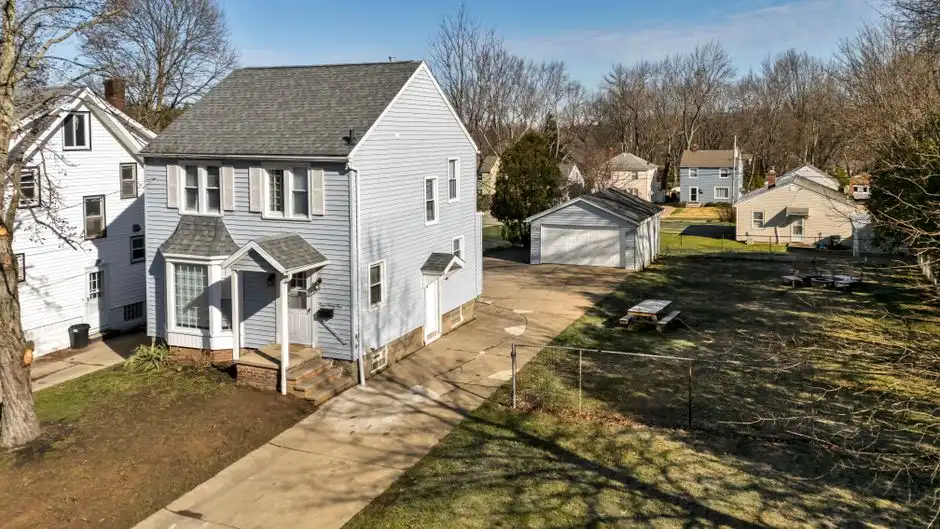
You can improve airflow in a two-story Des Moines home by fixing the three things that cause most uneven temperatures: restricted returns, leaky or undersized ducts, and a single thermostat trying to control two very different floors. Start by replacing a dirty filter and opening every supply and return register, then have your ductwork tested for leaks and static pressure. If the upstairs still runs 5-8°F hotter than the main floor, zoning or a duct redesign is usually the fix.
We're Des Moines Heating Repair Pros, and we've crawled through basements and attics in Waveland Park, Beaverdale, and the older two-story homes near Grand View. This guide walks through what actually moves the needle, what wastes your money, and what 2026 pricing looks like for the real fixes.
Why your upstairs runs hotter than your downstairs
Your upstairs is hotter than your downstairs because heat rises, attic insulation is often thinner than the walls, and the second floor usually sits at the end of a long duct run that has lost most of its pressure by the time it arrives. In Des Moines, summer attic temps regularly hit 130-140°F, and that heat radiates straight through the ceiling into the bedrooms above.
There's a second reason most homeowners never hear about: the thermostat. If it's mounted on the first floor, it's reading the coolest room in the house and shutting the system down before the upstairs ever catches up. That's why you'll see 72°F on the display and 80°F in the primary bedroom.
Older two-story homes around Waveland Park and the Ingersoll corridor were built before central air was standard. Their duct systems were sized for gravity furnaces, not for a modern 3-ton AC pushing 1,200 CFM through a trunk line that was never designed for it. That mismatch is the root cause of most air conditioning repair Des Moines IA calls we get in July and August.
Start with the filter and the returns
A clogged filter is the single most common cause of weak airflow in a Des Moines two-story home, and it costs you nothing to check. Pull the filter, hold it up to a light, and if you can't see through it, replace it. We recommend a MERV 8 to MERV 11 filter changed every 60-90 days - not the 1-inch fiberglass panels that let everything through.
Next, walk the house and count your return air grilles. A typical two-story home in Des Moines needs at least one return upstairs, ideally in the hallway ceiling or a central landing. If every return is on the first floor, the upstairs air has nowhere to go, and the system starves for return air all summer.
Check that no return is blocked by furniture, rugs, or a closed door. A bedroom door that stays shut all day traps pressure and chokes the supply. Undercut the door by 1 to 1.5 inches, or install a transfer grille, and you'll feel the difference within a day.
Check your vents and registers
Every supply register in the house should be fully open before you diagnose anything else. It sounds obvious, but we find half-closed dampers in Des Moines homes on almost every first visit - usually because someone tried to "balance" the system years ago and forgot.
Walk room to room and confirm:
- Supply registers are open and blowing in the direction of the room, not into a wall or curtain.
- Return grilles are open and not covered by furniture.
- No register is blocked by a bookshelf, bed, or entertainment center.
- Dampers in the basement trunk line are set to send more air upstairs in summer.
If the upstairs supply registers are barely moving air while the downstairs ones are blasting, that's a pressure problem, not a register problem. Closing downstairs registers to "push" air upstairs rarely works - it just raises static pressure and reduces total airflow. We'll get to why in a minute.
If your system is older and you're weighing repair versus replacement, our team handles HVAC tune up Des Moines IA visits that include a full static pressure and airflow reading, so you know exactly what you're dealing with before you spend a dollar on parts.
Inspect and seal your ductwork
Leaky ductwork is the biggest hidden airflow killer in Des Moines two-story homes, and it's usually worse in the attic runs than anywhere else. The Department of Energy estimates that 20-30% of the air moving through a typical duct system is lost to leaks, and in an attic that hits 140°F, that lost air is also pulling heat into the supply stream.
Go into the attic or basement with a flashlight and look for:
- Disconnected flex duct at boots and plenums
- Crushed or kinked runs (especially where they bend around joists)
- Torn duct insulation or bare metal sections
- Joints sealed with old gray duct tape that has dried and peeled
Sealing those joints with mastic and mesh tape, or replacing crushed flex runs with properly sized hard pipe, can recover 15-25% of your airflow. That's often the difference between an 80°F upstairs and a 74°F upstairs without touching the equipment.
If your ducts are original to a 1920s or 1950s Des Moines home, they may also be undersized for a modern system. In that case, duct sealing Des Moines IA combined with a partial redesign is the honest answer - patching a fundamentally too-small trunk line won't get you there.
Does closing vents help airflow in Des Moines Iowa?
No - closing vents in a Des Moines two-story home usually makes airflow worse, not better. Your blower is designed to move a fixed volume of air against a specific pressure. Close off half the supply registers and that pressure climbs, total airflow drops, and the coil can freeze in summer or the furnace can overheat in winter.
There's one exception: if a room is genuinely over-conditioned and you have a properly designed zoning system with a bypass damper, the zone controller handles the pressure. Without that, closing vents is a guess that costs you efficiency.
If you want to redirect air, adjust the balancing dampers in the basement trunk line instead. Those are designed for it. A $150-$300 balancing visit from a tech with a manometer will do more than a year of closing registers by hand.
HVAC zoning for a two-story Des Moines house
HVAC zoning for a two-story Des Moines house splits your home into two or more independently controlled areas, each with its own thermostat and motorized damper. The upstairs gets its own setpoint. The downstairs gets its own. The system runs only where it's needed.
For most Des Moines two-story homes, a two-zone system (upstairs and downstairs) solves the problem completely. Typical 2026 pricing in the Des Moines metro runs $3,200-$6,500 installed, depending on how many zones, whether the ductwork needs modification, and whether we're integrating with an existing variable-speed system.
Zoning is the right answer when:
- The upstairs runs 5°F or more hotter than the downstairs on a consistent basis
- You have a finished basement that stays cold year-round
- Someone works from home and needs one zone comfortable all day
- You've already sealed ducts and balanced the system and it's still uneven
Our team installs HVAC zoning systems Des Moines IA with bypass dampers and static pressure controls so the blower never fights itself. Done right, zoning cuts the temperature spread to 1-2°F and drops summer cooling costs 10-20%.
Common mistakes that make airflow worse
The most expensive airflow mistake we see in Des Moines is homeowners replacing a perfectly good AC because the upstairs is hot. The equipment isn't the problem - the delivery system is. A new 3-ton condenser pushing into the same leaky, undersized ducts will produce the same 80°F bedroom.
Other mistakes worth avoiding:
- Oversizing the AC. A bigger unit short-cycles, doesn't run long enough to dehumidify, and makes the upstairs feel clammy. Manual J load calculation first, always.
- Using cheap 1-inch filters. They let dust through and clog fast. A 4-inch media cabinet filter costs more upfront and moves more air for longer.
- Sealing the attic without sealing the ducts. New insulation over leaky ducts traps heat against them. Seal first, insulate second.
- Ignoring the return side. Adding supply vents without adding return capacity just pressurizes rooms and reduces total system airflow.
- DIY duct tape. Standard gray duct tape fails within a year in a 140°F attic. Use mastic or UL 181 foil tape.
If you're not sure whether your system is undersized, oversized, or just badly balanced, an HVAC safety inspection Des Moines with static pressure and temperature-split readings will tell you in about 90 minutes.
When to call a professional
Call a professional when the upstairs is consistently 5°F or more hotter than the downstairs after you've changed the filter, opened every register, and confirmed the returns aren't blocked. At that point the problem is in the ducts, the equipment, or the design - and guessing gets expensive.
We also want to hear from you if:
- You hear whistling or roaring at the registers (high static pressure)
- One room gets almost no air while others blast
- The AC runs constantly but never satisfies the upstairs thermostat
- You're planning a remodel and want the duct system evaluated before drywall goes up
- Your system is 12+ years old and you're weighing repair versus replacement
Des Moines Heating Repair Pros is a locally owned HVAC company serving Des Moines and the surrounding metro. We diagnose airflow problems with actual measurements - static pressure, CFM at the registers, and temperature split - not guesses. If you want a straight answer on whether you need a $300 fix or a $5,000 zoning install, we'll give you one.
Frequently Asked Questions
How do I improve airflow in my two story Des Moines home?
Change the filter, open every supply and return register, and check for crushed or disconnected ducts in the attic and basement. If the upstairs still runs 5°F+ hotter, have a technician measure static pressure and consider duct sealing or HVAC zoning. Most Des Moines homes need two of those three fixes.
Why is my upstairs so hot in Des Moines IA?
Heat rises, attic temps hit 130-140°F in July, and the upstairs sits at the end of the longest duct run in the house. A first-floor thermostat also shuts the system down before the upstairs cools. That combination is why second floors in Des Moines routinely run 5-8°F hotter than the main level.
Does closing vents help airflow in Des Moines Iowa?
No. Closing supply vents raises static pressure, reduces total airflow, and can freeze your AC coil or overheat your furnace. Adjust the balancing dampers in the basement trunk line instead, or have a technician balance the system with a manometer for $150-$300.
Should I get HVAC zoning for my two story Des Moines house?
Yes, if the upstairs runs 5°F or more hotter than the downstairs after ducts are sealed and the system is balanced. A two-zone system runs $3,200-$6,500 installed in 2026 and typically cuts the temperature spread to 1-2°F while reducing cooling costs 10-20%.
How much does it cost to fix uneven airflow in Des Moines?
Filter and register fixes cost nothing. A balancing visit runs $150-$300. Duct sealing runs $800-$2,500 depending on attic and basement access. Zoning runs $3,200-$6,500. Most Des Moines homeowners solve the problem for under $2,000 with sealing plus balancing.
Get help with HVAC in Des Moines
If your upstairs is still hot after the basics, we'll come out, measure the system, and tell you exactly what's wrong. No guesswork, no upsell on equipment you don't need.
Call Des Moines Heating Repair Pros at 515-876-5435 to schedule an airflow evaluation. We serve Des Moines, West Des Moines, Urbandale, Ankeny, and the surrounding metro.