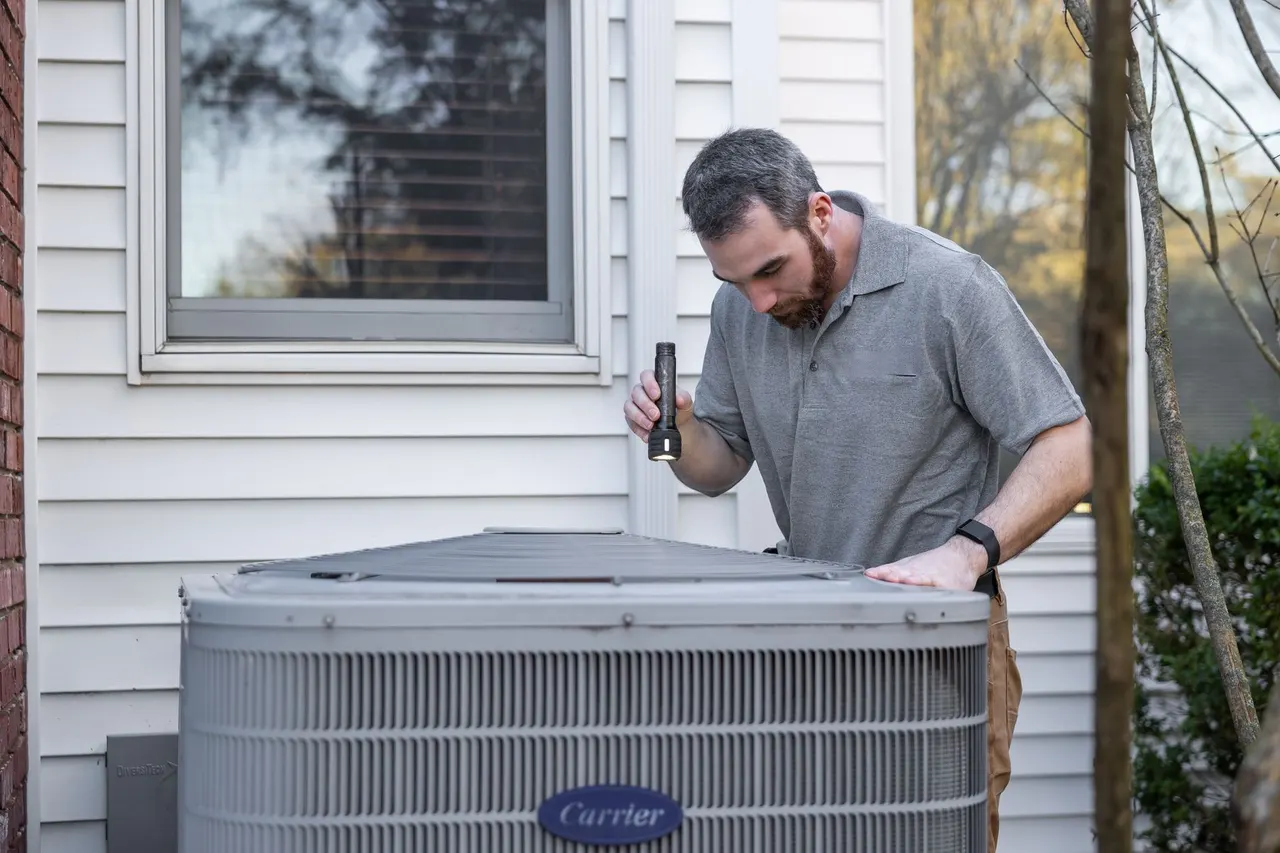
Duct Sealing
Duct Sealing Des Moines IA That Stops Leaks Cold
Duct sealing Des Moines IA homeowners can count on starts with finding every leak, not guessing at it. We pressure-test your duct system, seal the joints and runs that bleed conditioned air into attics and crawl spaces, then verify the fix with a before-and-after reading. If your upstairs runs hot while the main floor freezes, or your furnace runs nonstop in January, leaking ducts are often the culprit.
Service overview
What Duct Sealing Des Moines IA Actually Involves
Duct sealing is the process of closing the gaps, cracks, and loose joints in your home's duct system so conditioned air reaches the rooms it was meant to heat or cool. We start with a duct pressure gauge and thermal imaging camera to measure leakage, then seal accessible joints with mastic sealant, mesh tape, and mechanical fasteners. Flex duct connections, sheet metal seams, and plenum takeoffs get the most attention because that is where leakage concentrates.
In Des Moines, duct leakage shows up fast once the cold sets in. Homes in Sherman Hill and the Drake Neighborhood often have original 1920s ductwork with joints that have never been sealed, while newer builds in Waukee and Ankeny can still lose 20 to 30 percent of their conditioned air through poorly connected flex runs. If you have been searching for duct sealing in Des Moines IA near me and getting thin answers, we test first and quote the actual repair.
Practical benefits
Why Des Moines Homeowners Seal Their Ducts
Leaky ducts are one of the most common reasons a furnace or AC underperforms in central Iowa. Sealing them is one of the few home improvements that pays you back every month.
Lower Heating Bills
The U.S. Department of Energy estimates that sealing duct leaks can cut heating and cooling costs by 10 to 30 percent. In a Des Moines winter where furnaces run five months straight, that adds up fast. Most of our customers see a measurable drop on their first full MidAmerican bill after air duct sealing in Des Moines.
Even Room Temperatures
If your second floor runs 6 to 8 degrees warmer than the main floor in summer, duct leakage is usually the cause. Sealing the supply runs and returns balances static pressure so every register gets its share. Two-story homes in Beaverdale and Waveland Park see the biggest improvement.
Less Dust And Allergens
Unsealed ducts pull attic insulation fibers, crawl space dust, and outdoor pollen into your living space every time the blower kicks on. Sealing the system closes those pathways. Customers with allergy concerns often pair duct leakage sealing Des Moines IA with a fresh air filter change for immediate improvement.
Longer Equipment Life
A furnace or AC pushing against leaky ducts runs longer cycles and works harder than it should. That extra runtime wears out the blower motor and compressor years early. Sealing ducts reduces static pressure, so your Carrier or Trane system runs closer to its rated efficiency and lasts longer.
How service works
Our Duct Sealing Process, Step By Step
Every job follows the same five steps. You will know what is happening, how long it takes, and what the result should be before we pack up.
STEP 01
Leak Test
We connect a duct pressure gauge and blower to your system and pressurize it to measure total leakage in CFM. A thermal imaging camera shows us exactly where the losses are. This takes about 45 minutes and gives us a real number to work from, not a guess.
Tools and methods
Tools And Methods We Use
Duct Pressure Gauge
Measures total duct leakage in CFM so we have a real baseline before and after sealing. This is how we prove the result.
Thermal Imaging Camera
Shows temperature differences that reveal hidden duct leaks behind walls, in attics, and under insulation. We find leaks you cannot see with the naked eye.
Mastic Sealant And Mesh Tape
The industry-standard materials for permanent duct sealing. Mastic bonds to sheet metal and flex duct and does not peel off like foil tape.
Manifold Gauge Set
Used when we check refrigerant pressures on heat pumps and AC systems during the same visit. A duct problem and a refrigerant problem can look similar from the thermostat.
Multimeter
Tests thermostat wiring, blower motor capacitors, and control board voltages. Electrical issues often masquerade as airflow problems.
Fin Comb
Straightens bent condenser coil fins when we inspect the outdoor unit. Bent fins restrict airflow and reduce efficiency.
ACCA Manual D
The industry standard for residential duct design. We use it to check whether your ducts are sized correctly for your equipment and home. Undersized ducts cause the same symptoms as leaky ducts, and sealing alone will not fix a design problem.
Duct Leakage Testing
We pressurize the duct system and measure leakage in CFM. This gives us a number to work from and a target to hit. After sealing, we re-test and compare. You see the reduction in writing.
Mastic Sealing
We brush mastic sealant onto joints and seams, then wrap with mesh tape for reinforcement. This is the method recommended by Energy Star and it lasts for the life of the duct system, unlike tape.
Static Pressure Measurement
We measure static pressure at the supply and return plenums to see how hard your blower is working. High static pressure means the system is fighting restrictions. Sealing and balancing bring it back into range.
Where this service fits
When Duct Sealing Makes Sense In Des Moines
You just bought an older Des Moines home and the inspection flagged duct issues.
We run a full leak test and inspect every accessible run. We seal what needs sealing and give you a written report on the system's condition. You know exactly what you are working with before you move in. You start ownership with a sealed, efficient duct system instead of inheriting years of deferred maintenance.
Your energy bills jumped this winter and you cannot figure out why.
We test duct leakage and compare it to what your home should have. If leakage is the culprit, we seal it. If the problem is elsewhere, we tell you and quote the right repair. You get a clear answer and a fix that shows up on your next MidAmerican bill.
You are adding a room or finishing a basement and need new duct runs.
We design the new runs to ACCA Manual D specs, tie them into the existing system, and seal every connection. We also check whether the existing ducts can handle the added load. The new space gets proper airflow without starving the rest of the house.
You are replacing your furnace or AC and want to make sure the new system performs.
We evaluate the duct system before installation. If leakage is high, we seal it as part of the project. New equipment on sealed ducts delivers its rated efficiency instead of fighting leaks. Your new Carrier or Trane system runs at full capacity and you get the efficiency you paid for.
You have a two-story home with a hot upstairs and cold main floor.
We test static pressure and leakage, then seal the supply runs and adjust dampers to balance airflow between floors. If the system is undersized for the square footage, we tell you that too. Both floors stay within a few degrees of each other, and the thermostat setting actually means something.
Local execution
How Duct Sealing Works In Des Moines
Des Moines homes present specific duct challenges. The city has a mix of pre-war houses with original sheet metal ducts, mid-century ranches with flex duct added during remodels, and newer construction in the western suburbs. Each era has its own failure patterns. Pre-war homes in Sherman Hill and the Drake Neighborhood often have ducts that were never sealed at the joints and have been leaking for decades. Mid-century homes in Beaverdale and Waveland Park frequently have flex duct that was added later and connected poorly. Newer builds can still have leakage at plenum connections and register boots. Iowa's temperature swings, from below-zero January nights to 95-degree July afternoons, put constant stress on duct systems. Metal expands and contracts, flex duct sags, and mastic dries out over time. We see the worst leakage in attics, where summer heat bakes the ducts and winter cold makes them brittle. Crawl spaces are the second most common problem area. If you are looking for duct sealing for energy savings Des Moines homeowners actually see on their bills, the key is testing before and after so you know the work made a difference. We follow Iowa mechanical code and pull Des Moines building permits when required.
Sherman Hill
Many homes here have original 1890s to 1920s sheet metal ducts with unsealed joints. The high ceilings and plaster walls make duct access tricky, but the leakage is usually severe enough to justify the work.
Beaverdale
Post-war ranches with flex duct added during additions. We often find disconnected runs in the attic and crushed flex duct in tight spaces. Sealing and re-routing fixes most of it.
Waveland Park
Two-story homes with finished basements. Return air paths are often undersized, which makes leakage worse. We check return sizing as part of every job here.
Drake Neighborhood
Older homes converted to rentals or multi-family. Duct systems have often been modified multiple times. We map the system before sealing so we know what we are working with.
East Village
Newer condos and lofts with tight mechanical spaces. Duct runs are short but connections are often rushed during construction. Sealing the plenum and takeoffs makes a measurable difference.
Attic temperatures reaching 130 degrees in summer
Heat bakes flex duct and dries out mastic over time. Ducts in Des Moines attics degrade faster than ducts in conditioned spaces. We use high-temperature mastic and check flex duct for brittleness.
Below-zero cold snaps in January and February
Cold makes metal ducts contract and flex duct stiffen. Joints that were marginal in fall start leaking badly in winter. Fall is the best time to seal before the cold hits.
High humidity in summer
Leaky ducts in humid months pull moist air into the system, which can lead to mold growth in the ductwork. Sealing prevents this and keeps your AC from working overtime to remove humidity.
Older homes with plaster walls and limited duct access
We cannot always reach every duct run in pre-war homes. We seal what is accessible and tell you honestly what is not. In most cases, the accessible leaks are the biggest ones.
Problems we solve
Duct Problems We Solve For Des Moines Homes
Most duct problems in Des Moines fall into a few categories. We see them every week, and we know how to fix them without tearing your house apart.
Rooms that never reach the thermostat setting
We test duct leakage and static pressure, then seal the runs that are losing air before it reaches the registers. Balancing dampers get adjusted so every room gets its share. Most homes see room-to-room temperature differences drop to 2 or 3 degrees. You crank the thermostat higher to compensate, which wastes energy and still leaves some rooms uncomfortable. Over a full Des Moines winter, that adds hundreds to your heating bill.
High dust levels and allergy flare-ups
We seal the leaks that are pulling in contaminated air, then check your air filter and consider a whole-home purifier if needed. Sealing alone often cuts visible dust significantly within the first month. Leaky ducts pull dust, insulation fibers, and outdoor allergens into your living space every time the blower runs. For allergy sufferers, this makes home the worst place to be.
Furnace or AC runs constantly but never satisfies
We measure leakage, seal the system, and verify the reduction. Once the ducts hold air, the equipment cycles normally. If we find a failing blower motor or other issue during the visit, we quote the repair. The system is working harder than it should because conditioned air is escaping into the attic or crawl space. This wears out the blower motor and compressor years early.
Whistling or rushing noise at registers
We check return duct sizing against ACCA Manual D and look for crushed or disconnected runs. Sealing and, where needed, adding return capacity fixes the noise and improves airflow across the coil. This usually means the system is starved for return air or the ducts are undersized for the equipment. It is annoying, and it signals a system working against itself.
A practical standard for every visit.
Clear planningPrepared arrivalsCareful workLocal follow-through
Experience in the details
Duct Sealing Expertise You Can Verify
Our technicians hold NATE certification and EPA Section 608 certification, and we work to Iowa HVAC license standards on every job. We follow ACCA Manual D when sizing and evaluating duct systems, which means we do not just patch leaks, we check whether the system was designed to move the right amount of air in the first place. We have sealed ducts in everything from 1890s Sherman Hill four-squares to brand-new builds in the western suburbs. We know how Des Moines homes are built and where their ducts fail.
Where we work
One local team. A lot of ground covered.
Downtown Des MoinesEast VillageSherman HillDrake NeighborhoodBeaverdaleWaveland ParkHighland ParkIngersoll ParkSouth of GrandWaterburySalisbury OaksUnion Park
Check my address Most residential duct sealing jobs in Des Moines run $450 to $1,800 depending on home size, duct accessibility, and how much leakage we find. A single-story ranch with accessible attic ducts sits at the low end. A two-story home with a finished basement and tight crawl space runs higher. We give you a written quote after the leak test, so you know the number before we start.
Yes. The Department of Energy puts typical savings at 10 to 30 percent on heating and cooling costs when ducts are sealed and insulated properly. In Des Moines, where furnaces run hard from November through March, most homeowners see the difference on their first full winter bill. The payback period is usually two to four years.
Des Moines Heating Repair Pros offers air duct sealing in Des Moines and across Polk County, including Sherman Hill, Beaverdale, and the Drake Neighborhood. We are licensed, insured, and NATE-certified. Call 515-876-5435 to schedule a leak test and get a written quote for your home.
The clearest signs are rooms that never reach the thermostat setting, high dust levels, and utility bills that climb faster than the weather explains. You may also hear whistling at registers or feel air escaping at joints in the attic or basement. A duct pressure gauge test gives you a definitive answer in under an hour.
Keep exploring
Related HVAC Services
Your next step is waiting
Schedule Duct Sealing Des Moines IA Today
We test first, quote honestly, and show you the before-and-after leakage numbers. Licensed, insured, and NATE-certified. Call 515-876-5435 or book online and we will get your ducts sealed before the next cold snap.
Start with the basics
Contact Des Moines Heating Repair Pros
Call us at 515-876-5435 any time, day or night. Our dispatchers answer 24/7 and can usually schedule a same-day visit for heating and cooling problems in Des Moines. Prefer email? Send your address and a quick description of the issue to [email protected] and we will get back to you fast.