Emergency HVAC Repair in Des Moines: What to Do First
Furnace dead at 2 a.m. or AC quit in a July heat wave? Here is exactly what to do first for emergency HVAC repair in Des Moines, step by step.
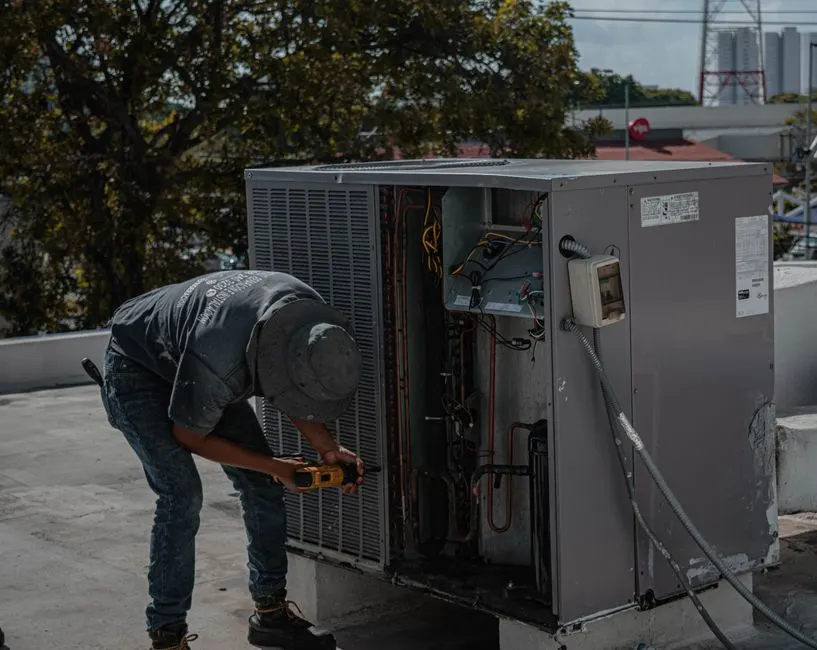
Emergency HVAC repair in Des Moines what to do first comes down to three moves: make sure everyone is safe, check the obvious switches and breakers, then call a 24/7 technician if the system still won't run. Do those in order and you avoid the two most expensive outcomes - a frozen burst pipe in January or a house that hits 90 degrees in July while you wait on a callback. The rest of this post walks through the exact steps for a furnace emergency, an AC emergency, what a real emergency looks like, what it costs in 2026, and who to call in Des Moines when it happens at 2 a.m.
What to do first when your heat or AC fails in Des Moines
Emergency HVAC repair in Des Moines is the same-day or after-hours service that gets your heat or cooling running again when the system quits during weather you can't safely wait out. The first thing you do is not touch the thermostat - it's confirm nobody in the house is at risk, then work the simple checks that fix roughly one in five no-heat and no-cool calls we run.
Here is the order that matters:
- Check on anyone vulnerable. Infants, elderly family members, and anyone with heart or lung conditions are the first priority. If indoor temps are dropping below 60°F or climbing above 85°F, get them to a warm or cool room with a neighbor or family member before you troubleshoot anything.
- Confirm the thermostat is actually calling for heat or cool. Batteries die, schedules get bumped, and someone in the house flips the mode. Set it 3-4 degrees past the current temperature and listen for the system to kick on.
- Check the breaker and the service switch. Furnaces and air handlers have a toggle switch near the unit that looks like a light switch. It gets bumped during storage or cleaning more often than you'd think.
- Check the filter. A filter packed solid with dust starves the system of airflow and trips the high-limit switch. If you can't see light through it, replace it.
- Call for emergency service if none of that works. A system that still won't run after those steps needs a technician, not more guessing.
If you want a baseline on what routine service looks like versus a true emergency, our page on HVAC tune up Des Moines IA covers the annual maintenance that prevents most of these calls in the first place.
Furnace emergency in Des Moines: the first 15 minutes
A furnace emergency in Des Moines hits differently than in most of the country because our January lows regularly sit between -5°F and 10°F, and a house can lose heat fast enough to freeze pipes in a single overnight. If you smell gas, get everyone out and call 911 from outside - do not flip switches or use your phone inside. That is a gas emergency, not an HVAC call.
If there's no gas smell, here's what we tell homeowners to do:
- Look at the flame. A healthy furnace burns a steady blue flame. A yellow, flickering, or lazy flame points to a combustion problem - shut the system down at the switch and call us.
- Check the LED error code. Most furnaces built in the last 20 years have a small window with a blinking light. Count the blinks and the pauses - that code tells a technician exactly where to start.
- Listen for the inducer motor. If you hear the small draft fan spin up but the burners never light, you're usually looking at a pressure switch, flame sensor, or ignitor issue. Those are common, and they're fixable in one visit.
- Do not keep resetting the system. Repeatedly cycling a furnace that won't light can dump unburned gas into the heat exchanger. One reset attempt is enough.
While you wait on a technician, close off unused rooms, run space heaters in the room you're occupying, and open cabinet doors under sinks on exterior walls so warm air reaches the pipes. A dripping faucet on the coldest nights is cheap insurance. If your furnace is 15 years or older and this is the second or third failure this season, it's worth pricing a replacement - our furnace repair Des Moines IA team can walk you through repair-versus-replace on the first visit instead of leaving you guessing.
AC emergency in Des Moines: what to check before you call
An AC emergency in Des Moines usually shows up in July and August, when the heat index pushes past 100°F and a house without cooling becomes genuinely dangerous within a few hours. Before you call, run these checks - they take five minutes and solve a surprising share of no-cool calls.
- Check the outdoor disconnect. There's a pull-out block or breaker box on the wall next to your condenser. If it's tripped or the pull-out is loose, the unit won't run.
- Look at the condenser. Cottonwood seed, grass clippings, and leaves pack the fins every June in central Iowa. A garden hose on low pressure, sprayed from the inside out, restores airflow.
- Check the indoor filter. Same rule as the furnace - a clogged filter freezes the evaporator coil and the system stops cooling even though the fan runs.
- Look for ice on the copper lines. Ice means low refrigerant or restricted airflow. Turn the system off at the thermostat and let it thaw before a technician arrives - running it frozen damages the compressor.
- Check the drain pan and float switch. A clogged condensate drain trips the safety switch and shuts the whole system down. If the pan is full, that's your answer.
If the system still won't cool after those steps, our air conditioning repair Des Moines IA crew carries the common parts - capacitors, contactors, blower motors - on every truck, so most no-cool calls are fixed the same day.
When is it actually an emergency?
Not every HVAC failure is a 2 a.m. call. Knowing the difference saves you after-hours rates and gets the truly urgent jobs to the front of the line.
Call for emergency service right away when:
- You smell gas, or your carbon monoxide detector is going off.
- Outdoor temps are below 20°F or above 95°F and the system is down.
- You have infants, elderly residents, or anyone with a medical condition in the home.
- You see sparks, smell burning, or hear grinding from the unit.
- Water is actively leaking from the air handler or ceiling near a duct.
You can usually wait for a next-morning appointment when the system is short-cycling but still producing heat or cool, when one room is off but the rest of the house is fine, or when the issue is a thermostat that won't hold a schedule. Those are still worth fixing fast - just not at emergency rates.
For the calls that can't wait, our emergency HVAC repair Des Moines IA line is staffed around the clock, including holidays. If you're in an older neighborhood like Sherman Hill or Beaverdale, where 1920s-era ductwork and updated furnaces don't always play well together, tell the dispatcher the age of the house - it changes what the technician loads on the truck.
Common mistakes homeowners make during an HVAC emergency
The most expensive HVAC emergency calls we run are the ones where a homeowner tried to fix the problem first. Here are the mistakes we see most often in Des Moines.
- Running a frozen AC. Ice on the coil means the compressor is starved of refrigerant or airflow. Running it anyway can kill the compressor - a $1,800-$2,800 repair in 2026 versus a $180-$450 thaw-and-recharge.
- Ignoring a gas smell. If you smell rotten eggs near the furnace, leave. Don't troubleshoot, don't call from inside, don't flip a light switch.
- Resetting the furnace over and over. One reset is fine. Five resets in an hour can flood the heat exchanger with unburned gas.
- Blocking the return air. Furniture, rugs, and storage pushed against return grilles starve the system and cause the exact failures people call us about.
- Using the wrong filter. A MERV 13 filter in a system designed for MERV 8 chokes airflow and freezes coils. Match the filter to the equipment, not to the marketing on the box.
- Waiting too long to call. A furnace that's been failing for a week rarely fixes itself. It usually fails completely on the coldest night of the year, when every HVAC company in the metro is slammed.
How much does emergency HVAC repair cost in Des Moines?
Typical 2026 pricing for emergency HVAC repair in Des Moines runs $250 to $650 for the diagnostic and a common repair, with after-hours calls adding $75 to $150 on top of standard rates. That covers the majority of what we see: failed capacitors, flame sensors, ignitors, pressure switches, contactors, and blower motors.
Larger repairs climb from there. A blower motor replacement typically lands between $500 and $900. A failed inducer motor runs $450 to $800 installed. A refrigerant leak repair with recharge on a central AC runs $600 to $1,400 depending on how much refrigerant the system takes. Compressor replacement is the big one - $1,800 to $2,800 - and at that point a technician should be talking to you honestly about replacement versus repair, especially on a system over 12 years old.
What drives the number up or down:
- Time of day. After-hours, weekend, and holiday calls carry a premium. A 9 a.m. Tuesday repair is cheaper than a 9 p.m. Saturday one.
- Parts on the truck. Companies that stock common parts fix more calls in one visit. Companies that don't, schedule a return trip - and you pay for both.
- System age and type. A 25-year-old furnace has fewer available parts and more labor hours. A modern heat pump or ductless system is usually faster to diagnose.
- Access. A unit in a finished basement or a tight attic closet takes longer than one in an open mechanical room.
We quote the diagnostic fee before we roll, and we tell you the repair cost before we start the work. No surprise line items.
When to call a professional
Call a professional the moment you're past the breaker, filter, and thermostat checks - anything beyond that involves gas, refrigerant, high-voltage electrical, or a heat exchanger, and none of those are DIY territory. A heat exchanger crack, for example, can leak carbon monoxide into your home with no smell and no warning, and it's not something you can inspect with a flashlight from the outside.
We handle emergency heating and cooling across the metro, from Sherman Hill and the East Village to West Des Moines, Urbandale, and Ankeny. Our technicians are state-licensed, we carry EPA 608 certification for refrigerant work, and we stock the parts that fail most in Iowa's temperature swings. If you're weighing a repair against a full system replacement, our central heating replacement Des Moines IA page breaks down the numbers so you can make the call with real information instead of a sales pitch.
Frequently Asked Questions
What should I do first for emergency HVAC repair in Des Moines?
Check on anyone vulnerable in the home, then confirm the thermostat is calling for heat or cool, check the breaker and service switch, and replace a clogged filter. If the system still won't run, call a 24/7 technician. Those four steps take about five minutes and resolve roughly one in five no-heat and no-cool calls.
Who do I call for emergency furnace repair in Des Moines IA?
Call a licensed HVAC company with 24/7 dispatch - Des Moines Heating Repair Pros at 515-876-5435 is staffed around the clock. If you smell gas, call 911 first from outside the home. For a furnace that won't light but no gas smell, a same-night technician can usually diagnose and repair in one visit.
Is there 24/7 emergency HVAC service in Des Moines Iowa?
Yes. Several Des Moines companies offer true 24/7 dispatch, including nights, weekends, and holidays. Expect an after-hours premium of $75 to $150 on top of standard rates. Confirm the company actually answers the phone at 3 a.m. rather than routing to a voicemail or an out-of-state call center.
How much does emergency HVAC repair cost in Des Moines?
Most emergency repairs in 2026 land between $250 and $650 including the diagnostic, with after-hours premiums of $75 to $150. Larger jobs - blower motors, inducer motors, refrigerant leaks - run $450 to $1,400. Compressor replacement can hit $2,800, at which point replacement often makes more sense.
Can I run my furnace or AC while waiting for the technician?
Run the furnace only if there's no gas smell and the flame is blue. Turn the AC off if you see ice on the copper lines or the outdoor unit - running a frozen system can destroy the compressor. For a furnace with a yellow flame or a tripping breaker, leave it off until a technician arrives.
Get help with HVAC in Des Moines
When your heat or cooling quits, you don't need a lecture - you need a technician at the door. We run 24/7 emergency dispatch across Des Moines and the surrounding suburbs, and we quote the diagnostic and repair before we start.
Call 515-876-5435 any hour, any day. We'll get your house back to a safe temperature and tell you straight what failed and what it takes to fix it.